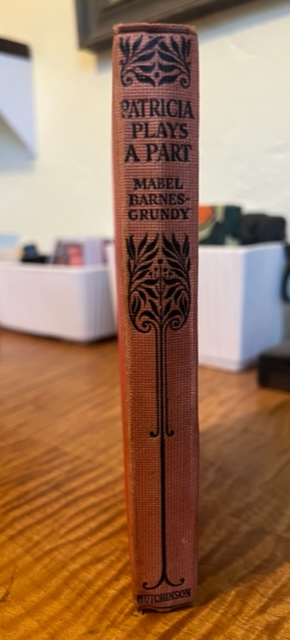
Patricia Plays a Part
Mabel Barnes-Grundy
Hutchinson & Co., 1913
Patricia Plays a Part
Mabel Barnes-Grundy
Hutchinson & Co., 1913
Description
[excerpted from NYT review, 8 March 1914]
Patricia is much courted for her fortune, so, wrestling an unwilling consent from her aunt and cousin, she runs away from her English estate to an obscure little pension in Mentone, and tries to fill the role of a young person of very limited means. Lo! she meets a distinguished artist, who, nauseated by adulation, has run away from his fame and is traveling incog. What more natural? But by no means is all plain sailing...
Notes
The NYT titles their review of Patricia Plays a Part "A COMPANIONABLE BOOK" and that it really is. Mabel Barnes-Grundy is a strong writer -- better than most in the world of vintage light fiction and she's as good at character-building as she is at felicitous turns of phrase. Patricia, 25 years old and heir to a tin-tack fortune, is exceptionally feisty and not especially self-aware, but she's generous, kindhearted and unaffected. David, 35, "conservative in everything but politics" finds himself utterly captivated by this girl, "too independent and emancipated" though she may, to his mind, be. His wooing is so reluctant and respectful, thankfully, that his following her around Europe comes off as sweet instead of stalkerish, and his beloved pet canary Richy Dick and the episode where he monologues a lizard don't hurt either. Aside from the core romance, which doesn't occupy but half the plot, there are some fun bits about Patricia's attempts to make do on her newly-limited allowance (a "stitch in time" was, apparently, an etui -- and handy those do seem!) and some real depth in her relationship with the capable 50-year-old spinster, Miss Felicity Ruggles. A nice portrayal of how important female friendship was to the emotional and practical survival of women in a social context with few economic opportunities and little to nothing in the way of a safety net. Patricia bogs down a bit in travelogue near the end (she's more economical, there, though than the Williamsons), and there's an odd digression hating on post-Impressionism, but overall, a very satisfying little read.
Flag: One use of the n-word in describing minstrel-style clothing.
Tags
1910-1919, English, Europe, France, Europe, Italy, artist, beautiful/handsome, cheerful, competent, determined, disciplined, disguise, escape old life, f/m, female, forthright, friend, selfless, generous, heir/heiress, hot-tempered, identity, concealed, independent, one wonderful day/week/month/year, personal growth/becoming a better person, prosperous, rich, romance, second/third-act breakup, secret wealth, single, spirited, strong, strong f/f friendship, third-person, travelogue, vacation, young
Flags
None