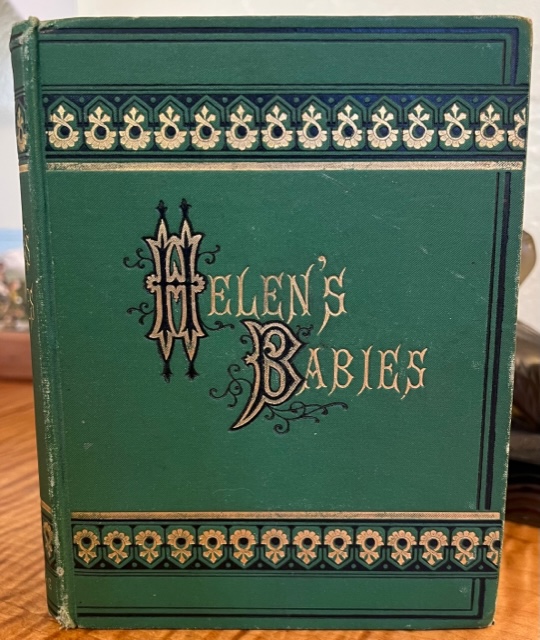
Helen's Babies
John Habberton
Loring, Publisher, 1876
Helen's Babies
John Habberton
Loring, Publisher, 1876
Description
When Harold Burton, 28-year-old bachelor, veteran, and “salesman of white goods” gets an invitation from his sister, Helen, to spend his summer vacation in her comfortable suburban home, reading, enjoying his brother-in-law’s excellent claret, and keeping a benign and distant eye on his nephews, “the best children in the world — everybody says so”, while she and her husband visit an old school-friend, he accepts with alacrity and looks forward to a fortnight's peace and leisure. Half a mile from Helen’s place, his carriage is accosted by two very dirty, very noisy, very determined, little urchins and he begins to realize his mistake. Over the next ten days, Toddy (3) and Budge (5), with “their ways innocent, crafty, angelic, impish, witching and repulsive” (as the subtitle goes) will drive their “Ucken Hawwy”, “Their Latest Victim”, to madness — and win him a bride!
Notes
Helen's Babies is a delight from start to finish. Habberton was actually an American Civil War vet (when he died in 1921, at 78, he'd been living in the Soldiers' Home at Kearny, N.J.) and he clearly knows kids (his obituary says he adopted several). His beleaguered narrator, Uncle Harry, is a pitch-perfect depiction of a person unused to dealing with children, suddenly confronted with two of the especially rambunctious variety. And Budge and Toddy are highly believable -- alternately exasperating and lovable as only the very young can be. The story of his visit, and his romance, is so charming that you readily forgive his frequent lapses into that characteristically Victorian brand of mawkish religiosity. And, honestly, the reader begins to understand and sympathize with the religious impulse as they see it in the context of Harry's and John's (the boys' father's) war experience, and of the family's coming to terms with the death of Baby Phil just "last fall". Of interest is Harry's hobby -- he is passionate about flower-arranging, and this is presented as a completely non-gendered activity. Also, several admiring references to the Fisk Jubilee Singers inspired me to learn more about this historically & culturally important group and about the talent and fortitude of its founding members. Flags: Discussion of child death. One use of n-word (to describe blackening shoes).
Tags
1870s, American, United States, Northeast, Victorian, beautiful/handsome, calm/tranquil, childcare, babysitting, unpaid, comedy, comfort-read, f/m, family home, first-person, fish out of water, intelligent, male, recommended, romance, salesman, single, uncle, vacation, young
Flags
child death/miscarriage, insensitive or outdated language (race/ethnicity/disability/sexual orientation)