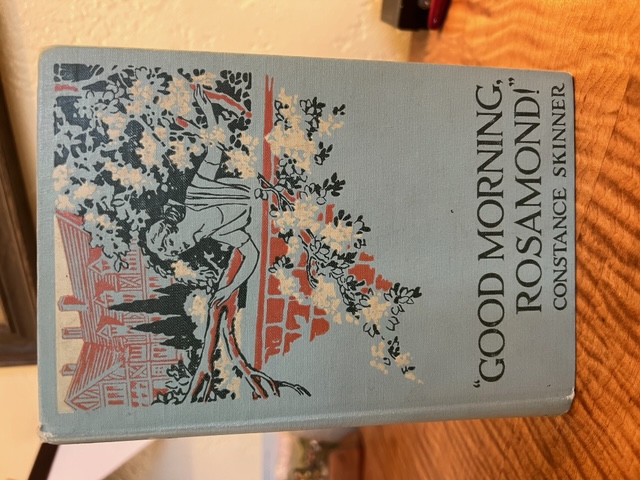
"Good Morning, Rosamond!"
Constance Skinner
Doubleday, Page & Company, 1917
"Good Morning, Rosamond!"
Constance Skinner
Doubleday, Page & Company, 1917
Description
Young Rosamond Mearely, the May/December widow of wealthy collector Hibbert Mearley, is fed up with a small town that looks down on her for marrying above her station (she's a farmer's daughter with the "daintiness of the field, not the hothouse"). When her late husband's domineering servants are called away on a family emergency, Rosamond decides to put aside her reluctant mourning and give herself "one wonderful day". But will snoopy, gossipy, snobby Roseborough let her?
Notes
I'm not sure who this one would appeal to. If you like small towns, you will think the characterizations of Roseborough and its inhabitants unfair; if you don't, you'll find in them the painful and revolting confirmation of your worst fears. At 100 pages, and with a brighter tone, it could have been a cute novella, a la Eleanor Hallowell Abbott or Edward Salisbury Field, but it's a long book, at 384 pages, and reads longer. The two main characters don't meet until page 234 and most of the text -- before and after -- boils down to an indictment of how women are trapped by social expectations and gender roles and how smallminded, toxic elders crush the spirit of youth. If you're interested in women's mourning traditions, there are some relevant passages early on. Flag: One very brief, unpleasant reference to a mixed-race baby.
Tags
1910-1919, America, American, age difference, beautiful/handsome, big, f/m, female, hair, dark, idealistic, independent, interclass, one wonderful day/week/month/year, rich, robust, romance, single, third-person, widowed, writer, young
Flags
insensitive or outdated language (race/ethnicity/disability/sexual orientation)